How to Manage a Rental Property: A Complete Guide for Landlords
 Rentway Team
Managing a rental property is really seven smaller jobs stitched together: marketing, screening, leasing, rent collection, maintenance, accounting, and communication. Do each one consistently and the property mostly runs itself. Let the routine slip and small problems compound into late rent, deferred repairs, and messy books. Here’s how to handle all seven.
Treat It Like a Business
The biggest mindset shift for a new landlord is to run the rental like a business, not a favor. That means written policies, consistent enforcement, and good records. Decide your standards up front — rent due date, late-fee policy, screening criteria, maintenance response times — and apply them the same way to every tenant. Consistency protects you legally and keeps relationships professional.
Market & Fill Vacancies
Vacancy is the most expensive thing that can happen to a rental, so the goal is to fill it fast with a qualified tenant. Take good photos, write an honest listing with the rent, deposit, and key terms, and publish it where renters actually look. Respond to inquiries quickly — leads go cold within hours.
Screen Every Applicant
A reliable, fair screening process is your best protection against late rent and evictions. Verify income (typically 3× the rent), run credit and background checks with written consent, and — most importantly — call previous landlords and ask whether they’d rent to the applicant again. Apply identical criteria to everyone to stay Fair Housing compliant. (We go deeper in our tenant screening guide.)
Get the Lease Right
Your lease is the rulebook for the whole tenancy. Spell out rent and due date, late fees, deposit terms, maintenance responsibilities, and entry notice. Use a lease that reflects your state’s laws and attach the required disclosures. Get it signed before move-in, and keep the executed copy somewhere you can find it.
Collect Rent on Autopilot
Move rent online and push autopay. When paying is one tap and reminders go out automatically, on-time rent becomes the default instead of a monthly chase. Set a clear late-fee policy and enforce it consistently. (More in our rent collection guide, or see how online rent collection works.)
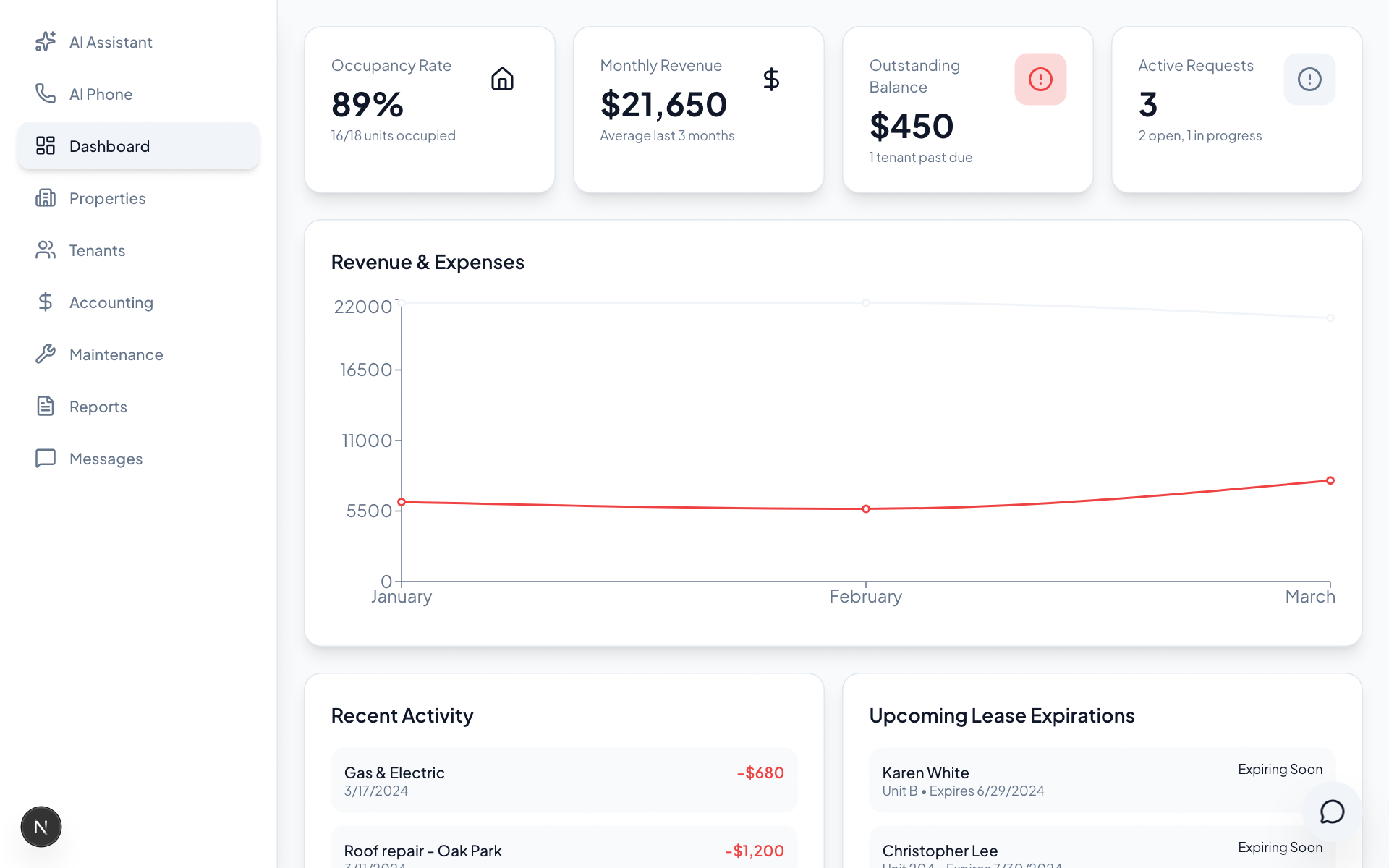
Rentway runs all seven of these jobs in one place — an AI property manager that answers the phone, collects rent, and triages maintenance for you.
Start freeStay on Top of Maintenance
Deferred maintenance is how a profitable rental quietly turns into a money pit. Make it easy for tenants to report issues, triage by urgency, and keep a reliable vendor list. Track every request from report to completion so nothing falls through the cracks — and so you have a record if a dispute ever comes up.
Keep Clean Books
Good records turn tax season from a scramble into a non-event — and tell you whether the property actually makes money. Track every charge, payment, and expense, reconcile against your bank account, and keep deposits separate. A real ledger (not a shoebox of receipts) is what lets you produce an owner statement or a P&L on demand.
When to Use Software
One or two units, you can manage with a spreadsheet and discipline. Past that, software pays for itself by removing the busywork: online rent, automated reminders, maintenance tracking, and accounting in one place. Rentway goes a step further — an AI property manager that answers the phone, collects rent, triages maintenance, and drafts the routine work, so you only handle the decisions that matter.
Let an AI run your rentals.
Rentway answers the phone, collects rent, and handles the busywork — included on every plan. Start free, no setup fee, no contract.
Start your free trialRelated Articles
How to Reduce Tenant Turnover
Turnover is one of the biggest hidden costs in rentals. Here is how to keep good tenants longer through responsiveness, fair pricing, and small retention moves.
Handling Tenant Complaints and Disputes
A calm, repeatable process for handling tenant complaints — how to log them, respond on time, defuse disputes between neighbors, and keep records that protect everyone.
Communicating With Tenants Who Speak Other Languages
Practical, respectful ways to communicate clearly with tenants whose first language is not yours, from translation tools to fair-housing awareness.