Common Rental Repairs Every Landlord Should Plan For
 Rentway Team
Every rental generates a predictable stream of repairs. The landlords who stay profitable aren’t the ones who avoid repairs — they’re the ones who budget for them, respond fast, and have a process so nothing turns into a 2am emergency or a habitability complaint.
Budget for Repairs Up Front
A common rule of thumb is to set aside 1% of the property’s value per year for maintenance, or roughly one month’s rent annually — whichever is higher for an older property. Treat it as a real reserve, not an afterthought. Repairs aren’t a surprise; their timing is.
The Most Frequent Repairs
- Plumbing: running toilets, dripping faucets, clogged drains, water heater issues.
- HVAC: filter changes, no-heat/no-cooling calls, thermostat problems.
- Electrical: tripped breakers, dead outlets, light fixtures.
- Appliances: refrigerators, ovens, dishwashers, in-unit laundry.
- Doors & locks: sticking doors, lock changes between tenants, weatherstripping.
- Turnover: paint, cleaning, carpet, minor drywall between residents.
Know Your Emergencies
Not every call is urgent — but a few always are, and how fast you respond can be a legal habitability issue. Treat these as emergencies: no heat in winter, no water, a major leak or flooding, gas smell, electrical hazard, or a security problem like a broken exterior lock. Have a 24/7 way for tenants to reach you — or an AI phone linethat triages and escalates — so a burst pipe doesn’t sit in a voicemail until morning.
Rentway answers maintenance calls with AI, triages urgency, and opens a work order with full context — so an after-hours emergency reaches you instead of a voicemail.
See the AI phoneWear vs. Tenant Damage
Normal wear and tear is your cost; damage beyond that can come out of the deposit. Faded paint, minor carpet wear, and small nail holes are wear. Holes in walls, broken fixtures, and pet damage are deductible. The thing that lets you tell them apart fairly is documentation — a move-in checklist with photos, compared against move-out. (See our security deposit guide.)
Build a Repeatable Process
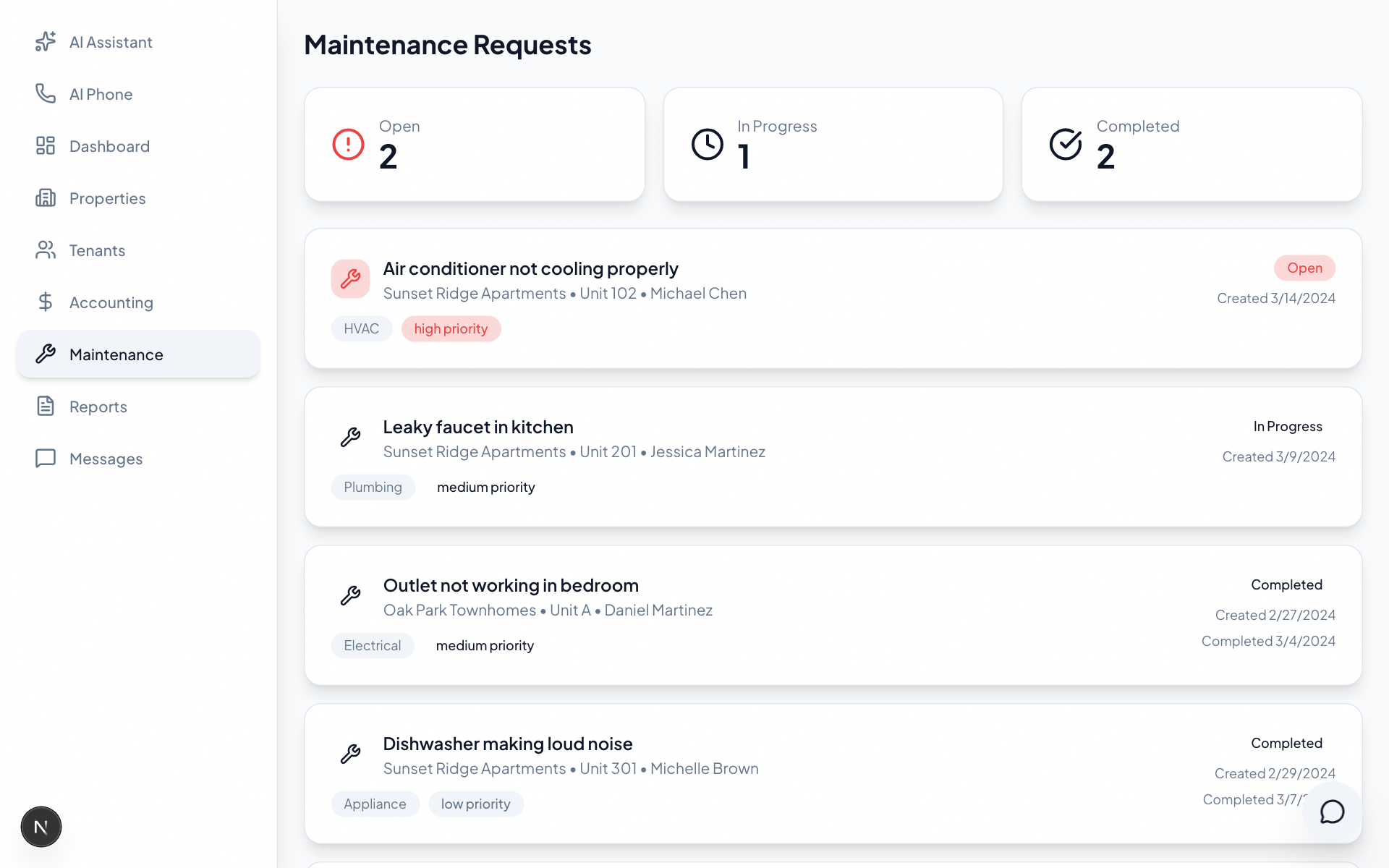
The difference between a calm rental and a chaotic one is process. Make it easy for tenants to report an issue, capture the details (what, where, how bad), triage by urgency, dispatch a vendor, and close the loop with the tenant — every time. Track each request from report to completion so nothing slips and you have a record.
This is exactly the kind of repetitive coordination software should own. Rentway captures the request, triages urgency with AI, opens a work order with full context, and keeps the tenant updated — so repairs get handled without living in your inbox.
Let an AI run your rentals.
Rentway answers the phone, collects rent, and handles the busywork — included on every plan. Start free, no setup fee, no contract.
Start your free trialRelated Articles
Working With Vendors and Contractors on Rentals
How to find, vet, and manage the vendors who keep your rentals running, from licensing checks to clear scopes and clean records.
Property Management Work-Order Updates: 4 Tenant Templates
Four copy-ready work-order updates for property managers, plus a minimum viable work-order record and an escalation workflow small landlords can use.
Maintenance Problems Tenants Don't Report Until They Get Expensive
The small leaks, moisture, drain, HVAC, electrical, pest, and exterior problems that quietly become major repairs — and how landlords can make early reporting easier.